Access to Ciudad Perdida requires booking a mandatory multi-day trek costing between 1,860,000 and 2,150,000 COP. Tour guides control entry to the ruins during daylight hours starting at 7:00 AM, and the entire trail shuts down completely every October for indigenous ceremonies.
Ciudad Perdida is officially open 24 hours a day, but access to the ruins is entirely controlled by authorized tour guides. Hiking and site visits happen strictly during daylight hours, with groups typically setting out around 7:00 AM to beat the jungle heat. The entire trail shuts down completely every October.
| Day | Hours | Note |
|---|---|---|
| Monday–Sunday | 12:00 AM – 11:59 PM | Access restricted to daylight hours via mandatory guided tours (usually starting around 7:00 AM). |
The archaeological site and the entire trekking route shut down completely for the month of October. Indigenous communities use this annual closure to perform sacred cleansing ceremonies without outside interference. No tour agencies operate or issue permits during this 31-day period.
You cannot buy a standalone entrance ticket to Ciudad Perdida. Independent trekking is prohibited, so visitors must book an all-inclusive guided tour through an authorized agency. Shared four- or five-day treks cost between 1,860,000 COP and 2,150,000 COP ($521 to $602 USD), covering transport from Santa Marta, meals, camps, and permits.
| Category | Price | Note |
|---|---|---|
| Standard 4-Day Shared Trek | 1,860,000 COP (~$521 USD) | All-inclusive base price for 2026; covers guides, food, camps, and entry. |
| Standard 5-Day Shared Trek | 2,150,000 COP (~$602 USD) | Slower pace over the same route; all-inclusive. |
| Private 3-Day Trek | Varies by group size | Strenuous pace; must be arranged directly with authorized agencies. |
| Private 6-Day Trek | Varies by group size | Slower-paced itinerary required for young children. |
| Independent Trekking | N/A | Strictly prohibited by government and indigenous authorities. |
No regular free entry days exist, and the entire site closes completely to all tourists every October for indigenous ceremonies.
Planning your visit to Ciudad Perdida? Find tours with free cancellation and skip-the-line options.
View All ToursVisit between December and early March during the dry season. The Buritaca River runs lower for easier crossings, and the steep clay trails dry out, preventing severe slipping hazards. Since independent trekking is prohibited, crowd levels remain strictly controlled year-round by tour agencies, though you will see zero tourists in October when the site closes for indigenous ceremonies.
| Period | Crowd Level | Recommendation |
|---|---|---|
| Early morning (06:00–09:00) | Moderate | Guides initiate the daily hike around 7:00 AM, allowing early risers to tackle the steepest uphill sections before peak humidity hits. |
| Midday (10:00–14:00) | Moderate | Intense tropical heat dominates the trail, requiring hikers to drink constantly from hydration bladders and take frequent shaded breaks. |
| Late afternoon (14:00–17:00) | High | Heavy tropical downpours frequently strike the jungle, driving groups into the camps to hang wet gear on covered clotheslines. |
| Evening (17:00–21:00) | High | Mosquitoes become highly active around the open-air bunk beds, making long sleeves and pants mandatory for anyone sitting down to dinner. |
A visit to Ciudad Perdida requires a mandatory guided trek lasting four to six days.
Independent hiking is strictly prohibited, meaning your total time depends entirely on the chosen tour itinerary. Most visitors select a standard four-day route covering 7.1 miles daily, while slower five- or six-day options break up the exhausting segments of steep, muddy terrain.
Independent trekking is strictly prohibited by government and indigenous authorities. You must book an all-inclusive tour through an authorized agency like Wiwa Tours or Expotur, which costs between 1,860,000 COP and 2,150,000 COP. These operators secure your permits and fund local community contributions.
Book your trek during the dry season to avoid slipping on hazardous clay trails and crossing flooded rivers. The entire route closes to tourists every October for sacred indigenous cleansing ceremonies. Ask your guide to start hiking at daybreak to beat the intense afternoon heat.
Limit your gear to a 20-liter daypack. Tour operators provide all meals, bedding, and heavy camping equipment at the jungle camps. Pack your passport and electronics inside high-quality dry bags to prevent water damage from sudden tropical downpours.
Change into long pants, a long-sleeve shirt, and high socks at camp to block aggressive mosquitoes. Hang damp hiking gear on covered clotheslines immediately to protect it from late-afternoon rain. Shake out your boots every morning before putting them on to dislodge hiding scorpions.
Claim a bunk bed or hammock far from the communal washrooms upon arriving at camp. Sleeping near the bathrooms guarantees constant wake-ups from flushing toilets, creaking doors, and passing headlamps. Each sleeping spot includes a protective mosquito net.
Standard shared tours in 2026 cost between 1,860,000 COP and 2,150,000 COP ($521 to $602 USD). This flat fee covers park entry, round-trip 4WD transport from Santa Marta, professional guides, meals, and rustic bunk beds with mosquito nets. Private options for 3 or 6 days alter the final price based on the number of participants.
Independent trekking is strictly prohibited by government and indigenous authorities. You must book an all-inclusive package through an authorized agency like Wiwa Tours, Magic Tour Colombia, Turcol, or Expotur. These operators secure the mandatory permits and ensure a portion of your fee funds the descendant Arhuaco, Kogui, Kankuamo, and Wiwa communities.
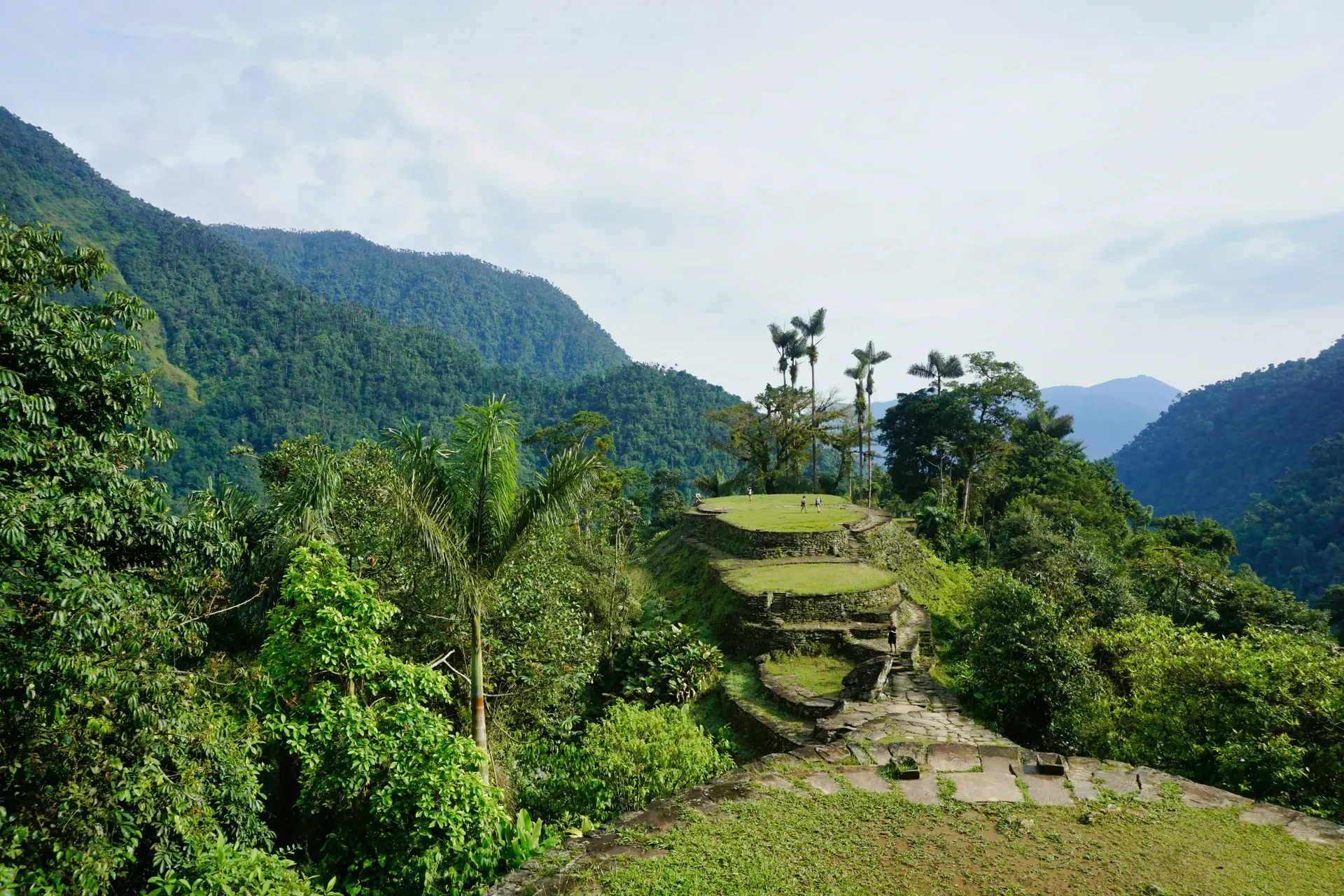
Tour guides manage actual access to the 169 stone terraces during daylight hours, typically beginning the final ascent around 7:00 AM. The surrounding park officially remains open 24 hours a day, but hikers sleep in designated jungle camps each night. Starting the 1,200-step climb at dawn helps groups beat the intense afternoon heat and humidity.
The trail and archaeological site shut down entirely every October. Indigenous communities use this month-long closure to perform sacred cleansing ceremonies without tourist interference. March through November brings the peak rainy season, turning the steep clay paths into slick mud and making Buritaca River crossings hazardous.
Most visitors choose a 4-day/3-night or 5-day/4-night itinerary covering roughly 7.1 miles of jungle terrain per day. Slower-paced 6-day hikes exist for families with young children or elderly hikers needing extra recovery time. Active trekkers can request a strenuous 3-day private option to compress the daily mileage into tighter windows.
Single-use plastic water bottles, plastic bags, and drones are strictly banned from the trail. You must pack a reusable water bottle or hydration bladder, as camps provide chemically treated river water from large containers. Keep your gear light by carrying only a 20-liter daypack with essentials like quick-drying clothes and dry bags for electronics.
All bedding and heavy camping equipment are included in your initial tour price. Hikers sleep in open-air jungle camps on long rows of bunk beds or hammocks provided by local families. Choose a bed far from the communal washrooms to avoid waking up to flushing toilets and headlamp beams throughout the night.
Browse verified tours with free cancellation and instant confirmation.
Find Tours